
The short answer: Yes – but an agricultural exemption (ag-exempt) may apply. Skip to “Step 3” if all you want is information on the Utah ag building exemption.
If you’re planning to build a pole barn in Utah, you will generally need a building permit. Skipping this step can lead to fines, delays, and issues down the road. The good news? If you follow a simple step-by-step process, getting permits is reasonably straightforward – and this guide will walk you through it.
Note: If you build with us, we handle a lot of this for you. In certain cases, you will have to apply for your own permit including if you are building a commercial building with us.
Key Takeaways
- Most pole buildings require a building permit, but agricultural exemptions sometimes apply.
- Building permits for pole barns in Utah usually cost $500–$1,500 and take 2–6 weeks to get.
- Zoning rules (setbacks, height, use type) apply everywhere – even for ag-exempt barns.
- Electrical, plumbing, septic, and driveway permits are often separate from the main building permit.
- Starting without permits can lead to fines, stop-work orders, or even required demolition of your pole barn (yes, really).
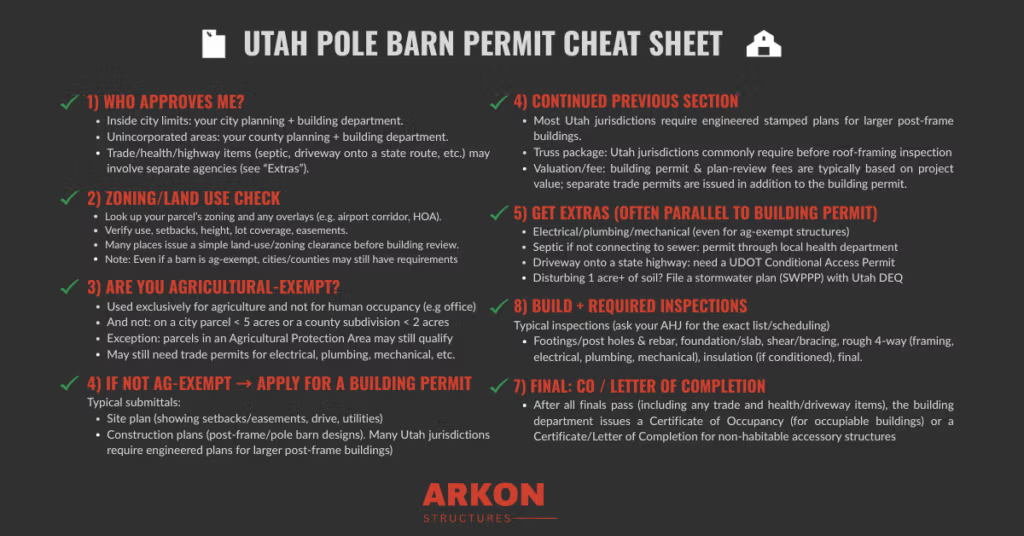
Before we go deep into the topic, here is a cheat sheet we created to help guide you through the permit, inspection, and building process. Feel free to save this for future reference:
Steps In The Permitting Process
Step 1: Identify your Authority Having Jurisdiction (Who Approves You)
Before you check zoning or submit anything, figure out which agency has authority over your property.
- If you’re inside city limits, your city planning and building departments handle zoning and permits.
- If you’re in an unincorporated area, your county planning and building departments do.
- Knowing your AHJ up front ensures you contact the right office and follow their process from the start.
Step 2: Check Your Zoning Classification and Rules
Now that you know your AHJ, verify that your land allows the type of building you want to construct.
- Contact your planning department or use their online zoning map.
- Confirm your parcel’s classification and allowed uses.
- Check setbacks – how far you must be from the property line, height limits, and easements (e.g. rights of way).
- Even if ag-exempt, you must still follow zoning regulations.
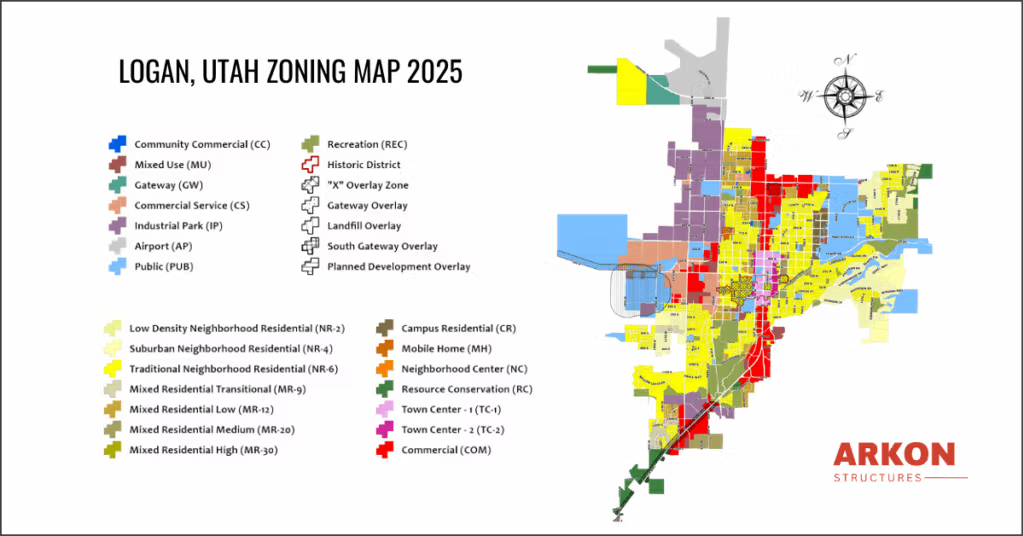
Most cities and counties in Utah provide a zoning map like this one for Logan, Utah:
Zoning codes often include categories such as:
- Residential
- Commercial
- Industrial
- Agricultural
Each category has specific regulations.
Local zoning classifications can differ significantly between municipalities and counties, so consult local government building departments for accurate information.
Step 3: Determine if You Qualify for an Agricultural Exemption
If your building is truly agricultural, you might be able to skip the building permit process, although zoning laws and trade permits will still apply.
- Utah Code §15A-1-204 allows exemptions if the building is:
- Used exclusively for agriculture (equipment, feed, livestock)
- Not for human occupancy (no office, bathroom, living area, or public use)
- Location requirements:
- Inside a city: on ≥5 contiguous acres
- In county/unincorporated area: on ≥2 contiguous acres
- Land in an Agricultural Protection Area may also qualify.
- Even if exempt, you will still need separate electrical/plumbing/mechanical permits if adding those things.
- If use ever changes (like adding an office or bathroom), the exemption ends and full permits are required.
- For complete clarity on your eligibility for an ag exemption, reach out to your local county or municipality building department.
Step 4: Apply for a Building Permit (If Not Exempt)
Once you confirm you’re not exempt, you can start your application.
Typical submittals:
- Site plan showing setbacks, drive, and utilities
- Engineered post-frame plans (most Utah jurisdictions require stamped plans for larger buildings)
- Truss package/shop drawings
- Pay plan review and permit fees (based on valuation)
- Review time is typically 2–6 weeks
Step 5: Get Additional Permits (If Needed)
These are often separate from your main building permit and can be obtained in parallel:
- Electrical, plumbing, mechanical: always needed if adding these systems
- Septic: through your local health department
- Driveway onto a state highway: UDOT Conditional Access Permit
- Disturbing 1+ acre of soil: Utah DEQ stormwater permit (SWPPP)
- Call 811 (Blue Stakes) before digging — required by law
Step 6: Build and Complete Required Inspections
Once construction starts, inspections keep everything on track.
- Schedule inspections through your AHJ (city or county building/planning department)
- Keep your approved plans and permits visible on site
Here is a breakdown of some of the typical inspections to expect:
| Stage | Description | When To Schedule |
| Post Holes & Rebar (Footing/Foundation Prep) | Earliest inspection for embedded posts. | Before pouring concrete around posts or backfilling. |
| Foundation/Slab | For buildings with a concrete floor or additional footings. | After concrete pour but before it cures fully (24-48 hours). |
| Shear/Bracing (Framing/Structural) | Verifies lateral stability after posts and girts/trusses are up. | After framing but before sheathing or siding. |
| Rough 4-Way (Framing, Electrical, Plumbing, Mechanical) | Combined rough-in for systems if included (common for shops/garages). | After framing and rough-ins, before insulation or concealment. |
| Insulation (if conditioned) | Only for heated/cooled spaces. | After insulation install, before drywall or final coverings. |
| Final Inspection | Overall approval and Certificate of Occupancy (if needed). | After all work complete, including siding, roofing, and utilities. |
Some AHJs may also require:
- Temporary power inspection (if setting up a construction power pole)
- Framing-only inspection separate from shear/bracing
- Pre-construction site inspection (for erosion control or setbacks)
It really is going to depend on your specific jurisdiction.
Step 7: Get Your Final Certificate
You’re almost done with your pole barn/pole building!
- If occupiable: Certificate of Occupancy
- If non-occupiable: Certificate or Letter of Completion
Permit Costs and Timelines
- Building permit + plan review: usually $500–$1,500
- Electrical/plumbing/mechanical permits are separate
- Typical review time: 2–6 weeks
Common Mistakes to Avoid
- Starting work before permits are issued
- Assuming ag-exempt status when acreage/use doesn’t qualify
- Forgetting trade permits for electrical/plumbing
- Building too close to property lines (violating setbacks)
- Using non-engineered plans when your AHJ requires engineered ones
Frequently Asked Questions
Do you need a building permit for a pole barn?
Yes, you typically need a building permit for a pole barn, so check your local regulations to ensure compliance and get started on your project the right way. There are exemptions in many states for strictly agricultural buildings.
Is there an exemption for building permits in Utah for agricultural buildings?
Yes, agricultural buildings in Utah can be exempt from building permit requirements if they are used exclusively for agricultural purposes.
What is the size limit for a shed or storage building that may not require a building permit in Utah?
Most jurisdictions exempt non-habitable sheds under 200 sq ft, but still require zoning compliance.
How much can a building permit cost for a pole barn?
Typically $500–$1,500 for the building permit in Utah and plan review, plus separate fees for trade permits.
P.S. If you have any questions about the building process or want to build a pole barn in Northern Utah or Southern Idaho, contact us.